
Dune: The Battle for Arrakis story
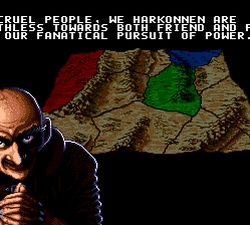
This game has sand in its veins. In the early ’90s, Westwood Studios dared to bring something consoles almost never saw: a loud, living real-time strategy, where ornithopters streak by, harvesters rumble, and the ground itself trembles as a sandworm closes in. On PC the breakthrough wore the name Dune II, but on cartridges the cover read something else entirely — Dune: The Battle for Arrakis. Depending on where you grew up, that title morphed into all kinds of local variants: some swore by “Dune: Battle for Arrakis,” others asked for “Dune 2 on the Sega,” and sometimes shop windows flaunted the full English “Dune II: Battle for Arrakis.” Call it what you like — the soul stayed the same: Herbert’s universe, a war for the spice melange, and three Great Houses ready to wipe each other off the face of Arrakis.
From sand to cartridge
Virgin held the license, Westwood had the vision, and the springboard into memory was the console many of us knew as the Sega Genesis (Mega Drive abroad). The console port’s origin story is neat and clean: take the winning PC mix, keep the spirit and tactics, reshape it for a gamepad, and ship it to store shelves. Officially it’s Dune: The Battle for Arrakis — no “II” on the label — yet in fan chatter “Dune II: Battle for Arrakis” kept slipping through, while bootleg carts showed every font and translation under the sun. Those marches, exotic motifs, and coiled, tense rhythms — music many fans associate with Frank Klepacki — made the jump to 16-bit and instantly became ritual: power on, and you can already hear the wind in the dunes and feel the heat on your face.
Having a “real-time strategy” on a console felt almost defiant. Not everyone casually said RTS yet, but the loop — harvest spice, defend your base, endure ornithopter raids, pit Atreides against Harkonnen and Ordos — clicked into a fresh kind of thrill where split-second improvisation, not turn order, decides a mission’s fate. You felt it from the opening frames: clean iconography, a minimap, snap commands on the fly — all serving a goal PC players knew as “The Building of a Dynasty,” a subtitle many still remember from Dune II: The Building of a Dynasty. On a cartridge it became the concise Battle for Arrakis, and the name hit straight in the heart.
How Dune found us
In plenty of places it spread the classic ’90s way: flea markets by the station, kiosks stacked with carts, and rental shops where scuffed cardboard boxes passed from hand to hand. More than once a label carried a stern “local version” stamp, and inside you’d find mission passwords scribbled by hand. A clerk might whisper, “That’s the Dune on Sega — the strategy where spice is money,” and by evening the hallway chatter turned to tales of sandworms swallowing unescorted harvesters, or how someone lured Sardaukar into a kill zone by the walls.
The hype didn’t come out of nowhere. Herbert’s books were already dog-eared favorites; the desert had a foothold in memory, from paperbacks to well-worn VHS tapes. Suddenly it all lived inside a game where “the war for spice” wasn’t a slogan but a commander’s daily grind: mind the economy, yank a harvester out before the ground starts to ripple, call in a carryall, wait out a storm, and strike when the enemy blinks. Even saying “Dune 2 on Sega” turned into a secret handshake — heads nod, eyes light up, and everyone remembers those late-night raids and ornithopters skimming along dune crests.
Bootleg cartridges spread it faster than any ad campaign. Some boxes hid a photocopied grid of passwords; some covers flaunted a towering sandworm; some sellers swore it was the “European” version because the title screen said Dune II: Battle for Arrakis. The tangle of names could confuse, but never derail: one power-on and the desert was back, the soundtrack hooked your ears, and the eternal choice returned — noble-leaning Atreides, iron-fisted Harkonnen, or the cold calculus of Ordos. Every House name still rings like a battle cry from childhood.
Why we fell for it
The love here isn’t just about the whisper of sand or melange rustling through the ledger. It’s the feeling that you’re part of a grand war, where the brief hiss of an ornithopter spells trouble and a tidy little map becomes a full-blown theater pulling at the strings of fate. On consoles it had its own kind of magic: a couch, a gamepad, warm lamplight — and somewhere on distant Arrakis your tiny outpost swells into a true citadel. For many, it was the first “RTS on a Sega,” and it stuck because it trained patience and awareness rather than the reflex of a single jump.
There’s another reason. Dune baked in the habit of thinking strategically. You could see the DNA that later became genre canon: cleaner interfaces, defined unit roles, the simple truth that “resources are the lifeblood of your army.” Plenty of players didn’t know the devs by name yet, or realize that from Westwood would flow threads leading to a whole family of strategies. Memory works differently: one familiar motif and the hush of sand — and you instantly remember why Battle for Arrakis became more than just another cart in so many corners of the world.
And that’s how this console Dune lives on — a bridge between the legend on the page and those long evenings when every grain of melange could tilt the war. Call it Dune: The Battle for Arrakis, reminisce as “Dune 2 on the Sega,” or read “Dune II: Battle for Arrakis” on a battered label — your heart will still whisper the truth: this is the Arrakis where a single step in the sand can drown out fanfare.